Writings Before Now
WANT
House of Freedom
440hz
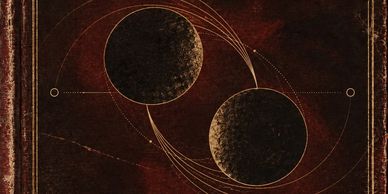
WANT — A Series of American Tragedies
What begins as conspiracy can sound absurd—until time changes the evidence.
WANT is an evolving series of short stories that explores America’s strangest suspicions, rumors, and hidden histories, taking them to their furthest possible conclusions.
Some tales collapse under their own ridiculousness, while others become darkly comic, and still others evolve into unsettling narratives as years pass and pieces once dismissed as impossible begin to resemble documented reality.
Part fiction, part research project, WANT follows the unknowns through time: what was feared, what was denied, what was later revealed, and what remains unresolved.
The stories move through shifting versions of truth, cultural memory, collective suspicion, and the strange territory where imagination sometimes arrives before proof.
Because before history is cleaned up, corrected, forgotten, or rewritten, there is always WANT—a chronicle of the things we thought could never be true, and a reflection on the unresolved mysteries that continue to haunt us.
440hz
House of Freedom
440hz
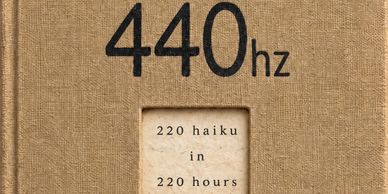
4440hz — 220 Haiku in 220 Hours
Written in Oaxaca, Mexico in 2008, 440hz is a work of constrained writing—a collection created inside a fixed span of time, where the clock becomes part of the form. This piece stands alongside themes seen in American Tragedies and echoes sentiments found in the House of Freedom.
Across 220 hours, 220 haiku return again and again to a rotating set of titles. Each subject reappears altered by what has happened since its last appearance, creating a quiet conversation across the collection: repetition becoming change, thought becoming revision, and meaning accumulating through return. It reminds us of the journey found in Loose Pages and the insights offered by Mr. Knowlit.
The poems are less a record of individual moments than a study of what happens to an idea when it is revisited under the pressure of time.
440hz is part of an ongoing timed-writing series: writing captured before reflection can fully reshape it, preserving the movement of thought as it happens.
House of Freedom
House of Freedom
House of Freedom
H.O.F. — House of Freedom
A fairy boy arrives at the House of Freedom with one impossible wish: to become mortal. As he explores this unfamiliar place, he discovers that wanting something deeply is not the same as being ready to receive it.
By day, the house tests him through play, mistakes, choices, and challenges he cannot simply wish away. By night, he visits the great artists, musicians, philosophers, and guiding spirits—gathering the knowledge he needs, but never the answers themselves.
Each lesson gives him something to carry back into the waking world, where he must decide what to do with it. He learns when to keep trying, when to change course, when to ask for help, and when the work can only be done by him.
House of Freedom is a fairy tale about becoming ready for the life you have chosen—about courage, purpose, trial and error, and the inner growth required before one can finally launch into a world of consequence, love, uncertainty, and mortality.
Final edit 2020.
Loose Pages
Perspective Glances
House of Freedom

Loose Pages
Written between Austin and Greenpoint, Brooklyn from 1996–2000, Loose Pages collects poems that emerged wherever life unfolded—on buses and subways, beneath trees, in bars, in journals, and in the uncertain spaces between relationships.
The poems move through love, solitude, purpose, desire, habit, identity, and the gradual formation of an adult self. The language is deeply personal, yet the writing is built to move beyond the moment that created it. Symbolism loosens each poem from its original circumstance, allowing meaning to shift, expand, and become something different in the hands of each reader.
Loose Pages is a record of becoming—unraveling one version of the self, writing another, and learning to live more honestly inside the space between the two.
It is an invitation to enter the poems without needing to know the life behind them, and to leave with whatever truth they awaken in your own.
Mr. Knowlit
Perspective Glances
Perspective Glances
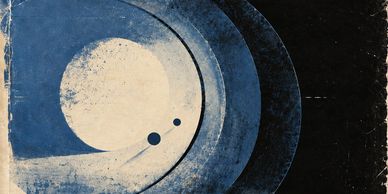
Mr. Knowlit
A journey into a world that is both utterly foreign and strangely familiar—a search for understanding the unknown. An investigator takes us on his journey to get out of the system and come back to talk about it—something no one has ever been able to do. The value systems are built on knowledge, energy, memory, and connection.
Written before many of today’s technologies were part of ordinary life, Mr. Knowlit delves into concepts of recorded human interaction, collective information, energy exchange, and a societal structure with evolving values.
Mr. Knowlit is less a prediction of the future than a journey toward a possibility that may have been surrounding us all along.
About the Work
The earliest version of Mr. Knowlit began in New York City in 1998. Much of the original manuscript was written while journeying through Europe with my father.
Perspective Glances
Perspective Glances
Perspective Glances
Perspective Glances
A king, a queen, and a peasant girl each carry a version of the same story—and each believes their version to be true.
Facts cross between them, yet meaning changes with every telling. Words intended to connect instead divide, and misunderstanding slowly hardens into consequence.
Perspective Glances is a short story in poetic form about the distance between fact and truth—about how three people can witness the same reality, speak from complete conviction, and still inhabit entirely different worlds.
No one is wholly right. No one is wholly wrong. What remains are the facts woven between them, and the tragedy created by everything each person believed those facts meant.
Austin, Texas
1997
Ships of Relation
Ships of Relation
Ships of Relation
Ships of Relation
A woman lives alone on an island, content in her solitude while ships come and go from her shores.
Only when they stop arriving does she discover that solitude and loneliness are not the same thing. What follows is a poetic passage through longing, love, loss, and the bitter aftermath of having once let someone stay close enough to matter.
Ships of Relation, is less about a love story than the changing tides within us—what we protect, what we invite in, and what remains after love sails away,
Chicago, Illinois
1995
Four Seasons
Ships of Relation
Ships of Relation
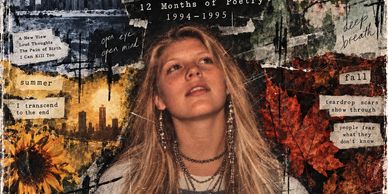
Four Seasons — 12 Months of Poetry, 1994
A year measured not by dates, but by what survives each season.
Written at twenty-one, Four Seasons moves through more than one hundred poems exploring love, mortality, self-doubt, relationships, abortion, ego, and the uneasy work of becoming oneself. Each season carries its own small death and return—something shed, something learned, something reborn.
This coming-of-age record from the grunge-era 1990s is written in a language driven as much by rhythm as meaning. The poems were not created with an audience in mind; they were written for the survival of the moment itself, as a way to process what could not yet be fully understood.
Across twelve months, the self changes repeatedly—questioning, resisting, unraveling, rebuilding—while searching for what, if anything, remains constant beneath it all.